Countertops occupy an unusual position in a kitchen budget. They are a fraction of the total spend, they sit at eye level across the most-used surface in the house, and they are the first thing a buyer touches when they walk in. Few upgrades are so visible for so little of the overall cost.
That visibility is why material choice carries real weight on the Eastside, where buyers arrive expecting low-maintenance luxury that survives daily family use. Here are the five materials that hold their value best in Sammamish kitchens, and the honest trade-offs on each.
Quick takeEngineered quartz and natural quartzite deliver the strongest overall return in Sammamish, combining luxury buyer appeal with long-term stain and scratch resistance. Porcelain slabs are rising fast among modern buyers, leathered granite suits heavy-cook kitchens, and butcher block earns its place as an island accent rather than a whole-kitchen surface.
Why countertops carry outsized ROI
The resale data makes an argument most homeowners find counterintuitive. According to the 2025 Cost vs. Value Report, a minor midrange kitchen remodel returns more than any other interior project, with national figures reported between roughly 96 and 113 percent depending on the source and market. A major midrange kitchen recoups closer to 49 to 51 percent, and a major upscale kitchen around 31 to 36 percent.
The definition matters. A minor remodel keeps the cabinet boxes and layout while updating fronts, hardware, appliances, flooring, and countertops. In other words, the highest-returning kitchen project in the country is essentially a surface upgrade with new counters at its center. Gut the layout and move plumbing, and the percentage return falls sharply even though the kitchen gets better.
For Sammamish specifically, one caveat matters more than the national averages: match the material to the neighborhood. In a market of higher-value homes, laminate or entry-level surfaces actively hurt you, because buyers read them as deferred maintenance. The risk here runs the other direction, over-improving past what the street supports.
The 5 materials
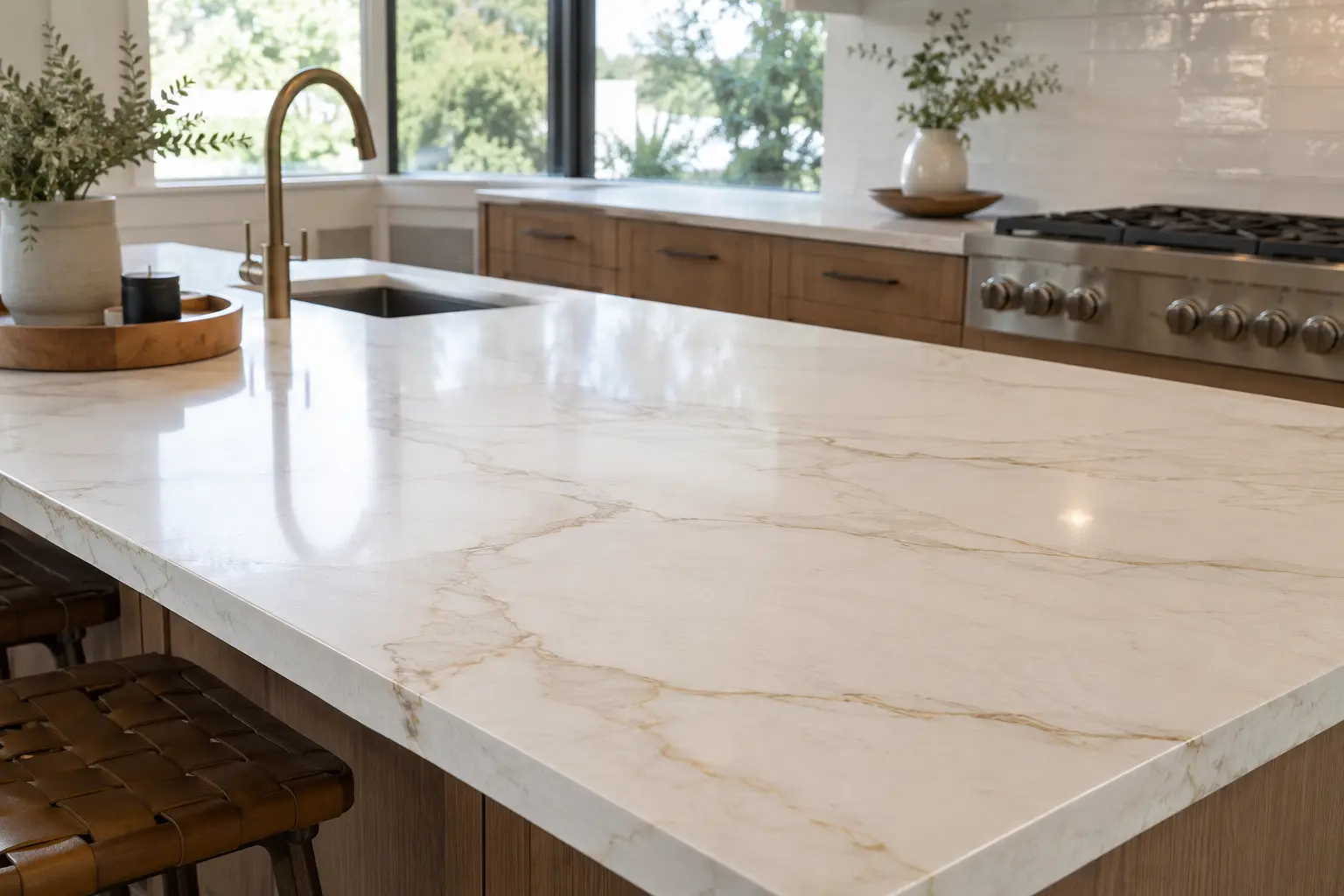
1. Engineered quartz: the gold standard for modern families
Why it pays off. Quartz is non-porous, which means it never needs sealing, resists stains from wine, coffee, and oil, and shrugs off the daily abuse of a family kitchen. It is the most forgiving premium surface available, and its pattern consistency means the slab you approve is the slab you get.
Sammamish appeal. White and softly veined marble-look quartz does real work in this market. Many Sammamish floor plans from the 1990s and early 2000s have generous square footage but limited natural light, and a bright, reflective counter lifts the whole room through a grey winter.
The trade-off. Quartz is heat sensitive. A pan straight off the burner can leave a resin burn, so trivets are not optional.
ROI rank: #1 for the combination of broad buyer appeal and durability.
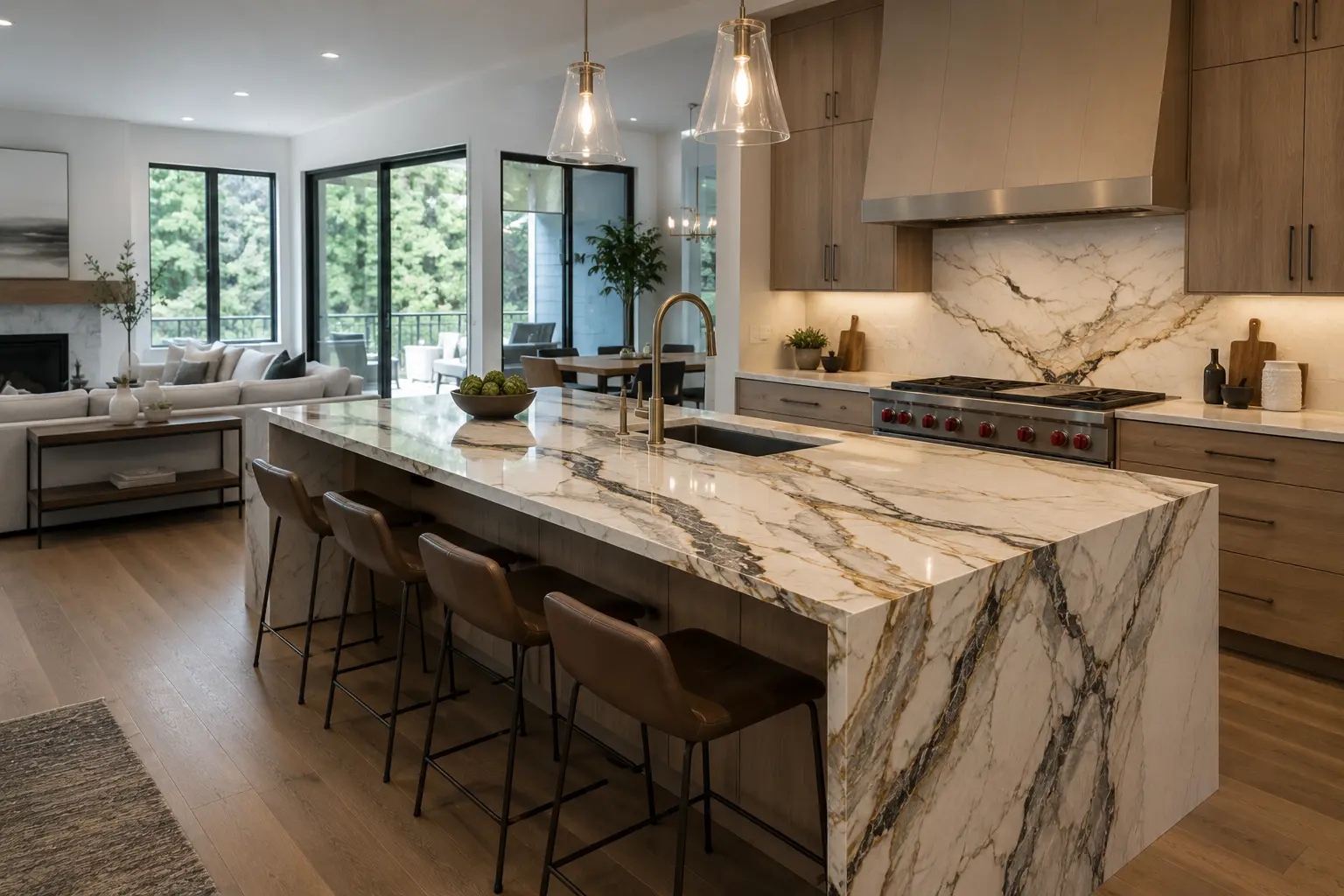
2. Natural quartzite: unmatched organic luxury
Why it pays off. Quartzite gives you the flowing, organic movement people want from marble without marble's fragility. It is genuinely hard, highly scratch resistant, and handles heat far better than engineered stone.
Sammamish appeal. In estate-style homes on the Sammamish Plateau and in neighborhoods like Trossachs, buyers at the top of the market can tell the difference between natural stone and an engineered look-alike, and they pay for authenticity. Quartzite is where that expectation is met.
The trade-off. It is porous enough to need periodic sealing, typically annually, and it sits at the premium end of the price range. Be aware, too, that some slabs sold as quartzite are actually softer dolomitic marble, so buy from a reputable supplier and view the actual slab.
ROI rank: #2 for luxury-segment value.
3. Porcelain slabs: the sleek, seamless contender
Why it pays off. Porcelain is effectively heatproof, completely non-porous, UV stable, and available in large-format slabs that can run up the wall as a continuous full-height backsplash with no grout lines at all.
Sammamish appeal. This is the material for the tech-professional buyer who wants ultra-clean lines and zero maintenance ritual. The seamless counter-to-ceiling look is distinctly current, and it photographs exceptionally well in a listing.
The trade-off. Fabrication and installation demand specialist skill, since large thin slabs are unforgiving to handle, and edge treatment is more limited than with stone. Use a fabricator who works in porcelain regularly.
ROI rank: a rapidly rising luxury trend with exceptional durability.
4. Leathered or honed granite: the tactile, low-glare revival
Why it pays off. A leathered or honed finish hides fingerprints, water spots, and smudges dramatically better than polished stone, which matters on a dark counter in a busy kitchen. Granite itself remains extremely heat and scratch resistant.
Sammamish appeal. Matte, textured dark stone paired with warm timber cabinetry is the heart of the Pacific Northwest modern organic look, and it sits comfortably in homes surrounded by evergreens rather than fighting them.
The trade-off. Granite still needs periodic sealing, and textured finishes can require slightly more attention in cleaning than a polished surface.
ROI rank: solid mid to high, and particularly strong for serious cooks.
5. Hardwood butcher block: the accent island feature
Why it pays off. Used strategically, on a prep island or a waterfall edge, butcher block adds warmth and a craftsman note that stone alone cannot deliver. It also gives you a genuine cutting surface.
Sammamish appeal. Paired with quartz or quartzite perimeter counters, a wood island creates the cozy, layered contrast that suits the region's craftsman-influenced homes.
The trade-off. This is the highest-maintenance surface on the list. It needs regular oiling, it scorches, and it is vulnerable to standing water, which makes it a poor choice around a sink. Use it as a secondary accent, never as the whole kitchen, if resale is a consideration.
ROI rank: high visual impact as an accent, low as a primary surface.
Material comparison
| Material | Relative cost per sq ft | Maintenance | Heat and scratch resistance | Resale buyer demand |
|---|---|---|---|---|
| Engineered quartz | Moderate to high | Very low, no sealing | High, but sensitive to direct heat | Exceptional, broadest appeal |
| Natural quartzite | High to premium | Low to moderate, seal yearly | Exceptional | Very high in the luxury segment |
| Porcelain slab | High, specialized install | Very low | Exceptional | High among modern buyers |
| Leathered granite | Moderate | Low, periodic sealing | Exceptional | Moderate to high |
| Butcher block accent | Low to moderate | High, regular oiling | Moderate | High as an island accent |
For guidance on slab thickness and edge profiles, which affect both cost and appearance on any of these, see our countertop thickness guide. For a deeper comparison of quartz against natural stone specifically, our countertop material guide goes further.
Sammamish-specific considerations
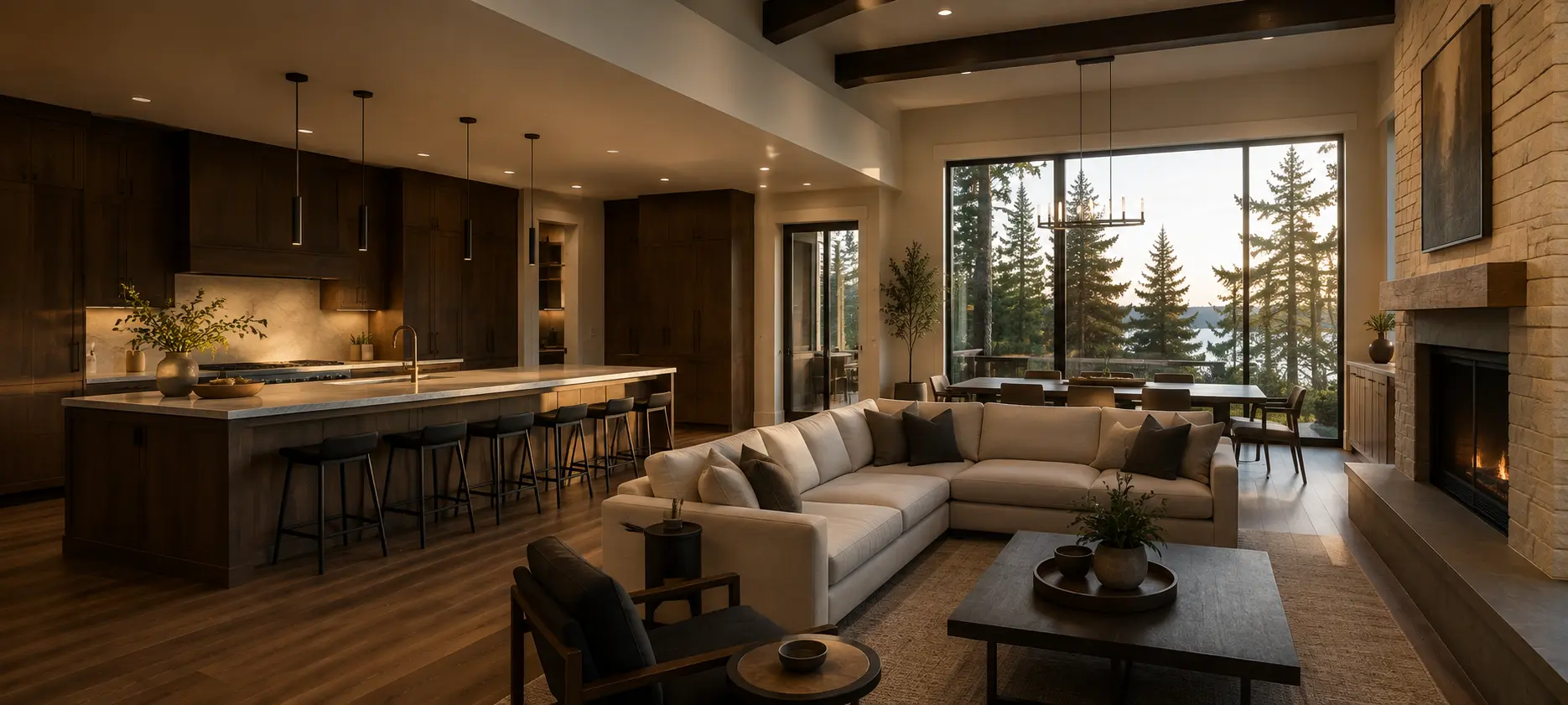
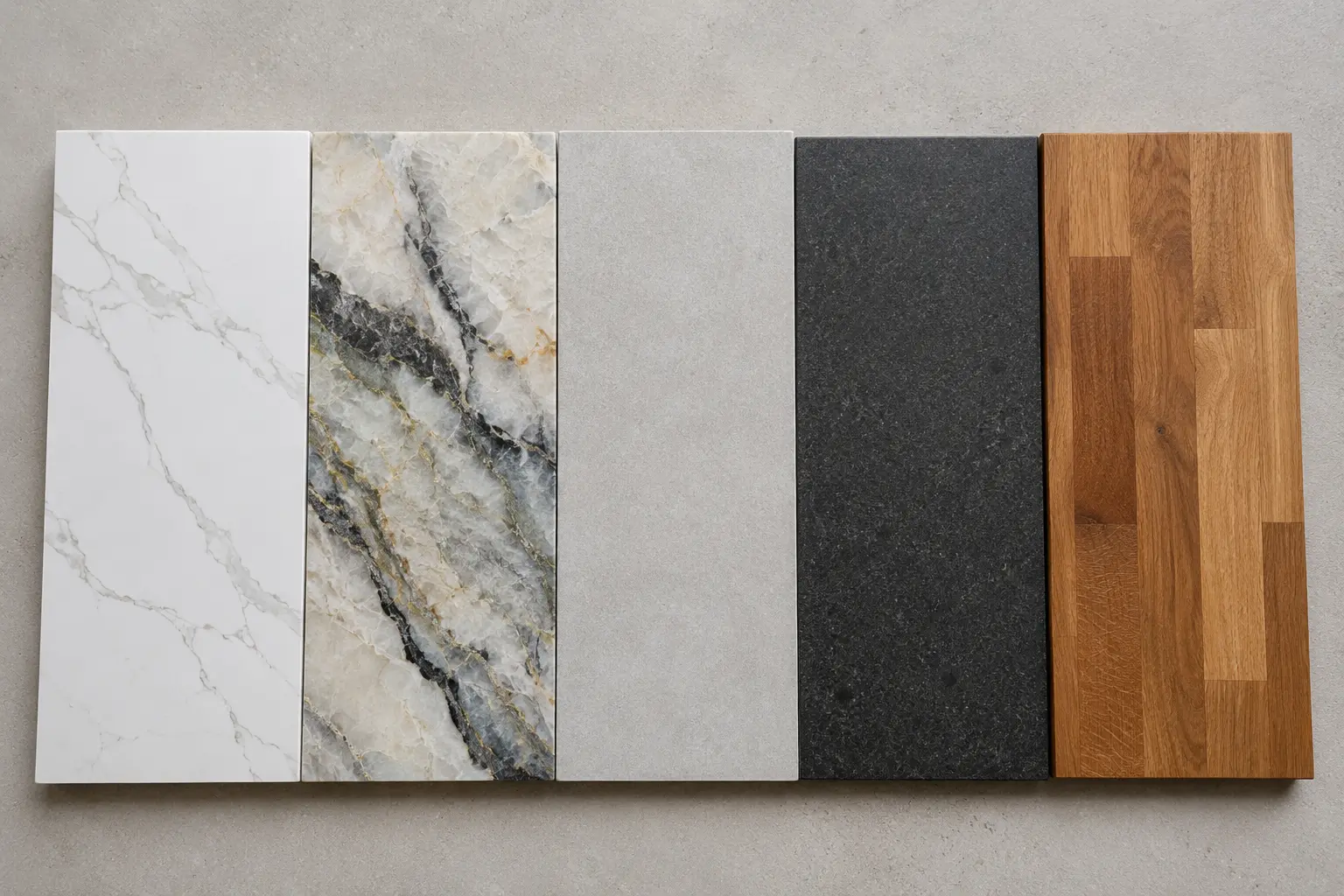
Grey-sky lighting changes everything. A slab chosen under a showroom's bright white lighting can look completely different in a Sammamish kitchen in November. Cool-toned greys and stark whites can read flat and cold under overcast light, while warmer whites, creams, and stones with warm undertones hold their character. Always view a full slab, and if possible, take a sample home and look at it on a grey afternoon and again under your actual kitchen lighting at night.
Open-concept sightlines. Most Sammamish homes put the kitchen island in direct view of a great room. That island becomes a focal point whether you plan it or not, which is the argument for putting your most dramatic, high-movement slab there and keeping perimeter counters quieter. It concentrates the visual impact and often the budget in the one place everyone looks.
Layered LED lighting. Under-cabinet LEDs rake light across a counter at a low angle, which exaggerates texture. That flatters leathered granite and honed finishes and can reveal every smudge on a high-gloss dark surface. Choose the finish and the lighting together rather than sequentially.