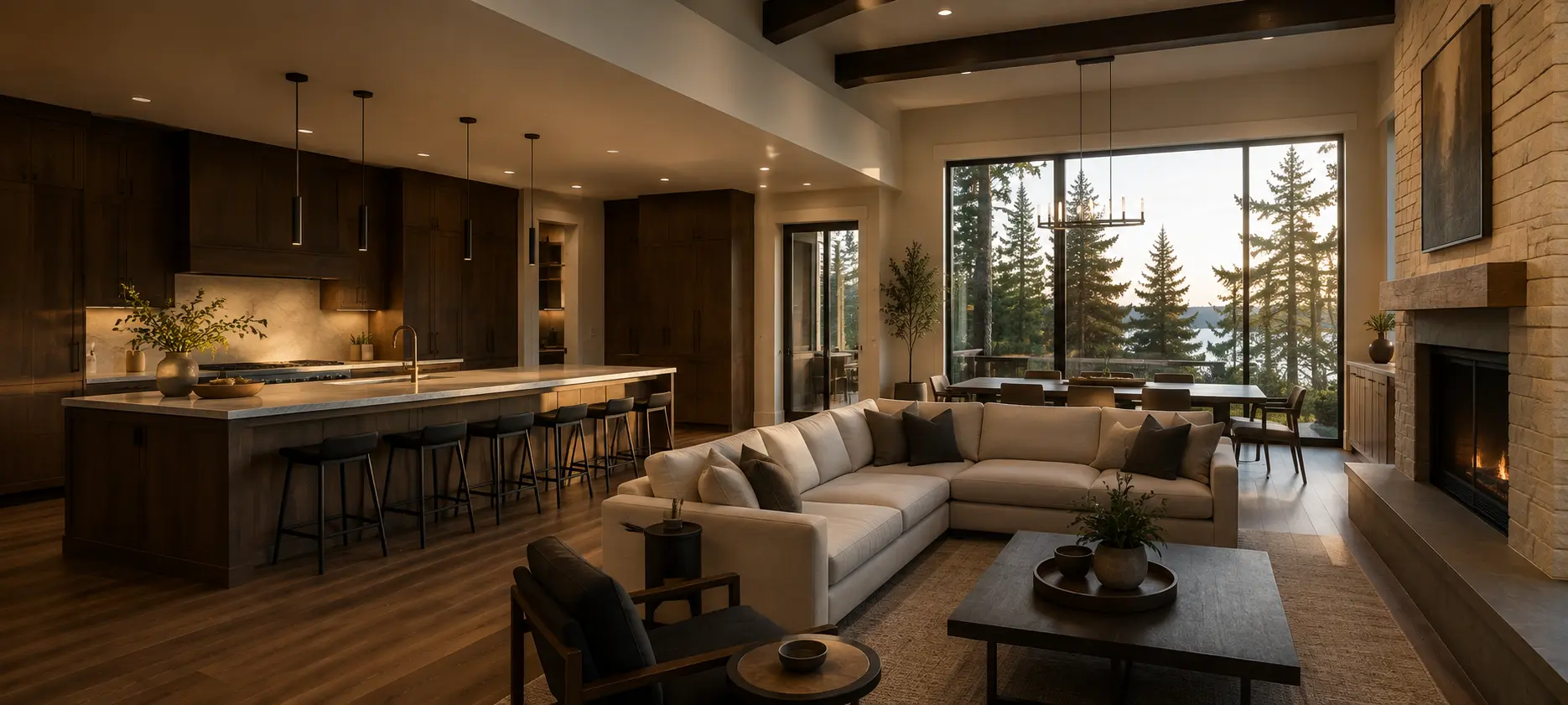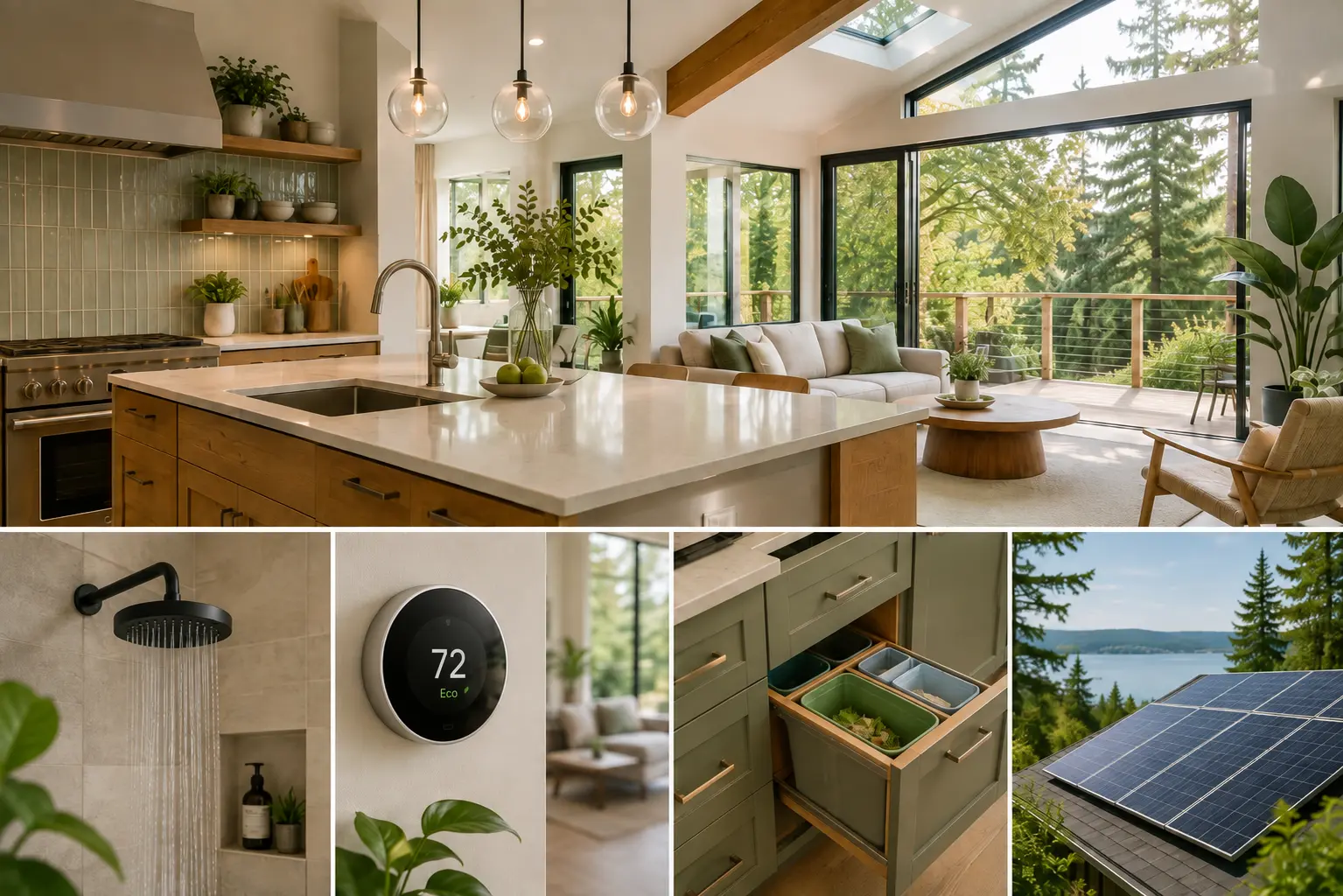
Green remodeling on the Eastside has quietly stopped being a niche request. In Kirkland it is closer to the default: homeowners here are technically literate, environmentally minded, and living in a climate that punishes bad building decisions. A kitchen or bath that manages moisture, runs on efficient electricity, and uses healthy materials is not a statement project anymore. It is simply a better-built house.
This guide covers the four sustainability trends actually shaping Kirkland kitchen and bath remodels right now, the local materials worth knowing, and the incentive landscape as it stands in 2026, which changed significantly at the start of this year.
Key takeaways- Electrification: homeowners are moving from natural gas to induction cooktops and from gas or electric-resistance heating to heat pumps, supported by Puget Sound Energy rebates. - Healthy indoor air: low and zero-VOC finishes plus moisture-resistant assemblies, which matter more in a wet Pacific Northwest winter than almost anywhere else. - Sustainable materials: locally sourced reclaimed wood, PaperStone made in Washington, cork, and FSC-certified cabinetry. - Waste diversion: deconstruction instead of demolition, keeping usable materials out of King County landfills and potentially earning a charitable deduction. - Incentives in 2026: the federal 25C and 25D tax credits ended on December 31, 2025. Utility and state rebates are now the savings path.
- Why eco-friendly remodeling is prioritized on the Eastside
- Trend 1: electrification & smart energy efficiency
- Trend 2: indoor environmental quality & PNW moisture control
- Trend 3: eco-friendly material alternatives
- Trend 4: deconstruction over demolition
- Stacking rebates & savings for your Kirkland remodel
- Frequently asked questions
- Building a greener, healthier Kirkland home
Why eco-friendly remodeling is prioritized on the Eastside
Kirkland has a specific combination of drivers. There is high technical literacy, thanks in part to the tech corridor, so homeowners here research efficiency ratings and payback periods before they call a contractor. There is genuine environmental awareness, reinforced by county and state policy. And there is the climate: long overcast, wet winters that make moisture management and daylighting practical concerns, not aesthetic ones.
That climate is why green building here tends to be about durability first. A bathroom that traps humidity grows mold, and mold destroys the finishes you just paid for. An under-insulated kitchen wall costs you every month for thirty years. Sustainable choices in the Pacific Northwest usually pay you back twice: once in utility bills and once in not having to redo the work.
King County actively supports this through its GreenTools program, which provides green building resources and guidance for the region, and through the Built Green certification program run by the Master Builders Association of King and Snohomish Counties. A Built Green rating gives a remodel third-party verified credibility, which is increasingly something Eastside buyers look for and value at resale.
Trend 1: electrification & smart energy efficiency
The single biggest shift in Eastside kitchens is the move off gas.
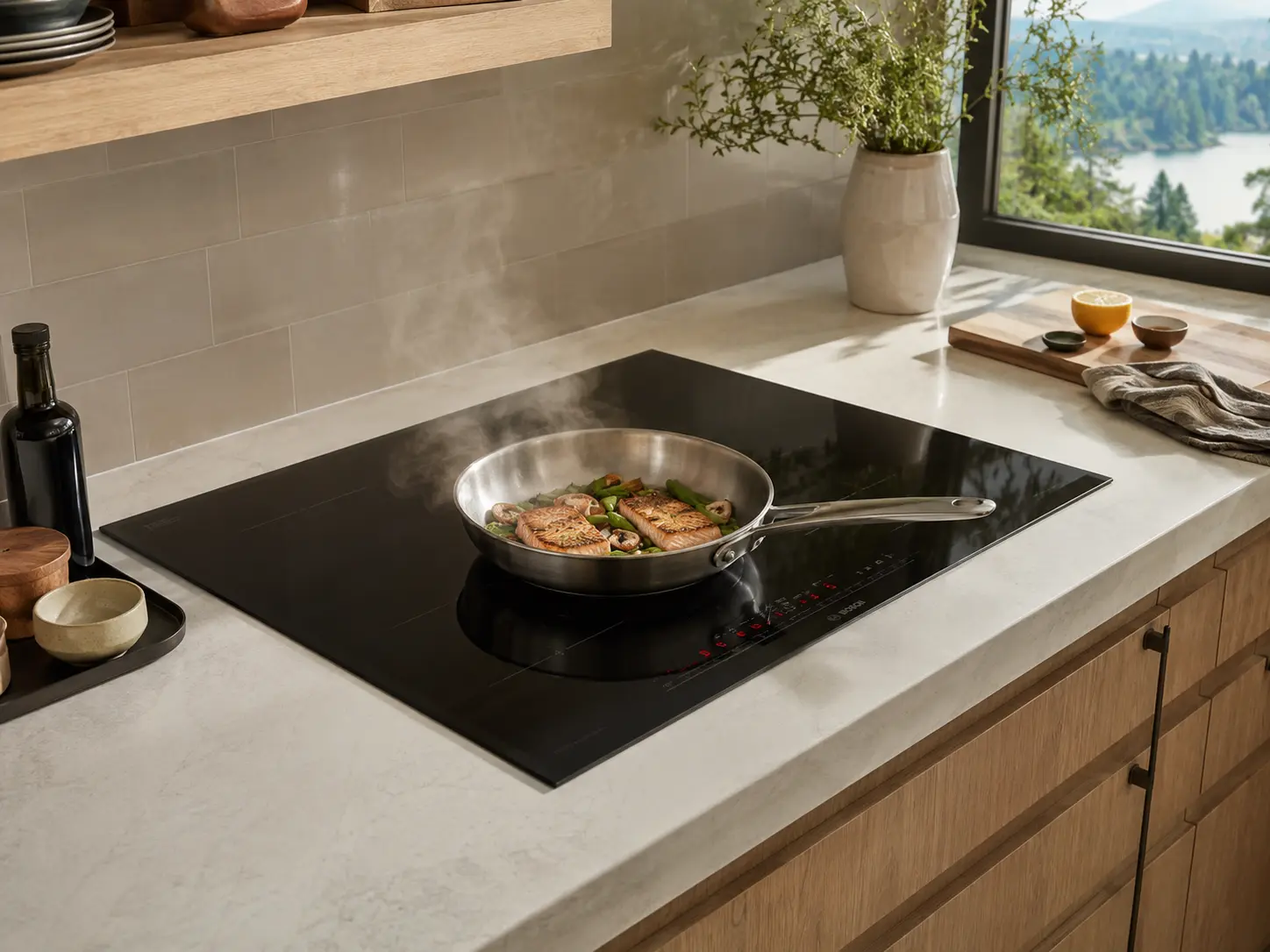
Induction cooktops vs. gas ranges
The health argument is what moved this from a trend to a default. Gas cooking produces combustion byproducts, including nitrogen dioxide, inside your home, and a kitchen that vents poorly keeps them there. That is a real concern in tightly built modern homes and in older homes with undersized ventilation.
The performance argument closes it. Induction delivers precise, immediate temperature control, boils water noticeably faster than gas, and leaves a flat glass surface that wipes clean in seconds because there are no grates or burner wells. The trade-off is honest: induction needs compatible cookware, and a new dedicated high-amperage circuit, which for many Kirkland homes means an electrical panel evaluation as part of the project.
Heat pump water heaters & HVAC integration
Beyond the cooktop, two upgrades do the heavy lifting. A hybrid heat pump water heater moves heat rather than generating it, making it far more efficient than a standard electric resistance tank, often on the order of three times more efficient. And a ductless mini-split or ducted heat pump gives a Kirkland home efficient heating in winter plus cooling in summer, which matters more every year as Puget Sound heat events become routine. Most older homes here have no central cooling at all, so a heat pump is often an upgrade in comfort as much as efficiency.
Trend 2: indoor environmental quality & PNW moisture control
If electrification is about energy, this trend is about the air you breathe and the assembly that keeps your bathroom intact.
Zero-VOC & non-toxic finishes
Conventional cabinet adhesives, paints, and sealants can off-gas volatile organic compounds and formaldehyde for months after installation, and a newly remodeled, well-sealed room concentrates them. The fix is straightforward: specify low or zero-VOC paints and sealants, and choose cabinetry with certified low-emission cores. Looking for GREENGUARD Gold certification is the simplest shortcut, since that standard is written around emissions limits for indoor environments.
Mold-proofing for Washington winters
This is where Pacific Northwest bathrooms are won or lost. Tile and grout are not waterproof on their own, so the assembly underneath has to be. Modern practice uses a continuous sheet or uncoupling membrane system, such as Schluter-KERDI, or cementitious backer board, to form a sealed tank behind and beneath the tile.
Ventilation is the other half. A humidity-sensing exhaust fan with a CFM rating sized to the room, like a Panasonic WhisperCeiling, runs only when moisture is actually present, which prevents mold without wasting energy the way a fan left running does. In a climate where indoor humidity stays high for months, that combination of waterproofing plus smart ventilation is the difference between a bathroom that lasts twenty years and one that fails in five.
Trend 3: eco-friendly material alternatives
Sustainable material choices in this region have a real local advantage: several of the best options are made or harvested nearby, which cuts transport emissions and supports Washington manufacturing.
| Area | Traditional choice | Sustainable alternative | Local and environmental benefit |
|---|---|---|---|
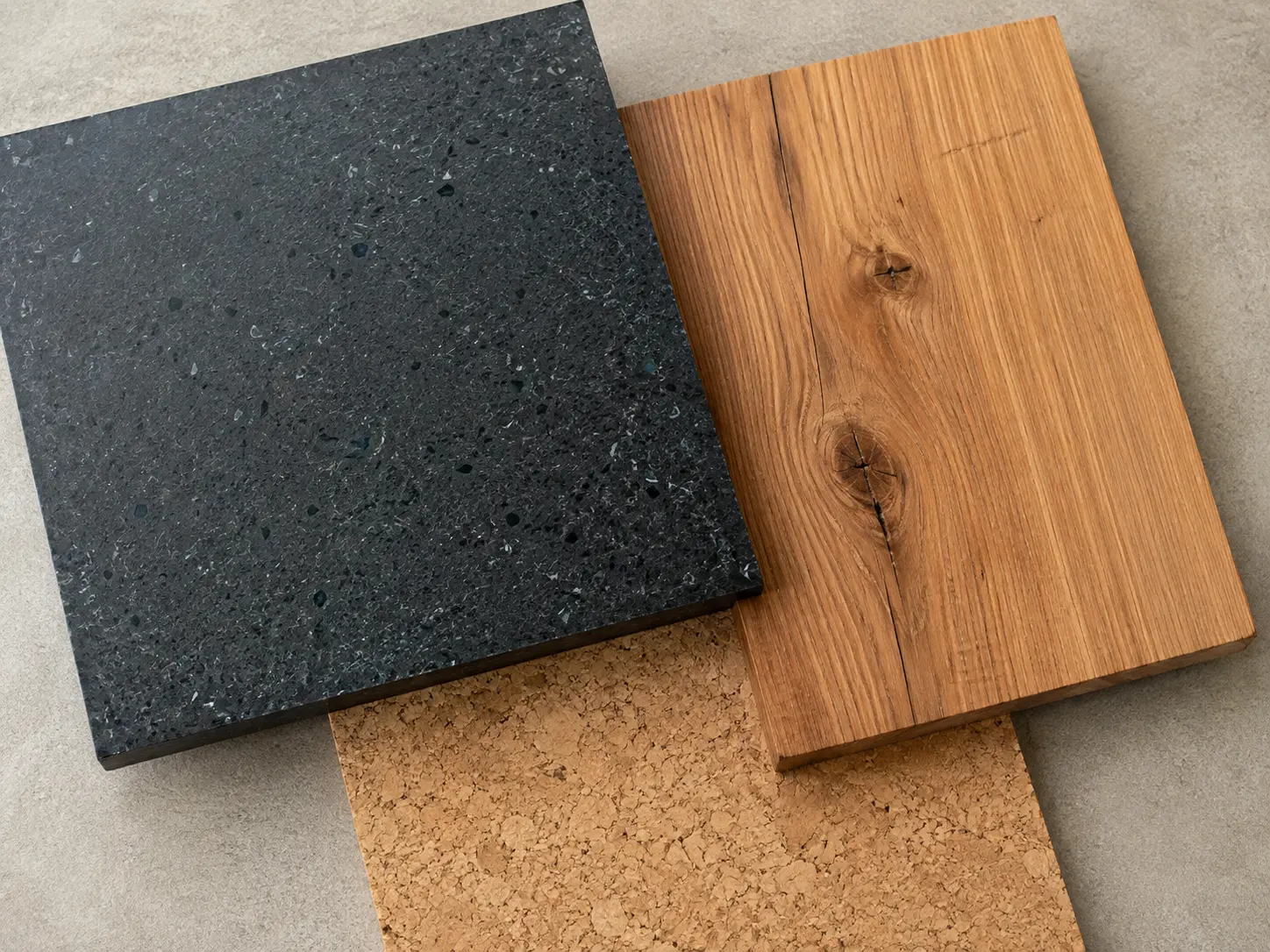
| Countertops | Granite or petroleum-based quartz | PaperStone or recycled glass | PaperStone is manufactured in Hoquiam, Washington from post-consumer recycled paper and non-petroleum resin |
| Cabinetry | Particle board with formaldehyde binders | Solid FSC-certified wood or bamboo | Sourced from responsibly managed forests, with no toxic off-gassing |
| Flooring | Standard vinyl | Cork or reclaimed Douglas fir | Natural insulation underfoot, rapidly renewable, and reclaimed fir is harvested locally in the PNW |
| Plumbing | Standard fixtures | EPA WaterSense low-flow fixtures | Cuts household water use by roughly 20 to 30 percent without sacrificing pressure |
Reclaimed Douglas fir deserves a specific mention here, because it is genuinely regional. Old-growth fir salvaged from Pacific Northwest buildings has a density and grain that new lumber cannot match, and using it keeps material in circulation rather than in a landfill. For countertop thickness and edge decisions on any of these materials, our countertop thickness guide covers the fabrication side.
Trend 4: deconstruction over demolition
Demolition treats a kitchen as garbage. Deconstruction treats it as inventory.
Instead of sending a sledgehammer through cabinetry and hauling it to a King County landfill, deconstruction carefully unbuilds the room so that cabinets, solid wood doors, light fixtures, appliances, copper piping, and dimensional lumber can be salvaged and reused. It takes more labor hours than demolition, which is the honest trade-off, but it diverts a substantial volume of waste and aligns with regional green building standards.
The Puget Sound area is unusually well equipped for this. Local salvage organizations including Second Use, the RE Store, and Habitat for Humanity ReStore accept quality used building materials, resell them, and fund community work with the proceeds. If you donate salvaged materials to a qualifying nonprofit, you may be able to claim a charitable tax deduction for their appraised value, which offsets part of the added labor cost. That is a question for your tax professional, but it is one worth asking before you schedule demolition, because once the cabinets are broken up the option is gone.
Stacking rebates & savings for your Kirkland remodel
This section changed substantially at the start of 2026, and a lot of remodeling content online has not caught up. Here is the accurate picture.
Federal tax credits have ended. The Section 25C Energy Efficient Home Improvement Credit, which offered up to 30 percent back on heat pumps, panel upgrades, and insulation, was terminated for property placed in service after December 31, 2025 by the One Big Beautiful Bill Act, and the Section 25D residential clean energy credit ended for expenditures after the same date. The IRS confirmed this in Fact Sheet 2025-05. If your equipment was installed and placed in service by that deadline, you may still claim it on your 2025 return. For anything installed in 2026, the federal credit is not available, and any contractor promising you one is working from outdated information.
Utility and state rebates are now the savings path, and Kirkland is well positioned. Puget Sound Energy serves Kirkland, and PSE continues to pay meaningful heat pump rebates, with amounts that scale by system type and rise substantially for income-qualified gas-to-heat-pump conversions.
One rule can cost you the entire rebate. As of April 2, 2026, PSE requires that rebate-eligible heat pump installations be performed by a contractor in its Trade Ally or Registered Energy Professional network. Hire outside that network and the rebate is forfeited, no matter how good the installation is. Confirm your installer's current Trade Ally status in writing before you sign anything, and note that PSE rebate applications are generally due within a set window after installation, so do not let the paperwork drift.
State rebates stack. Washington's HEAR program, funded through the Climate Commitment Act and administered via the Department of Commerce, provides additional rebates for households at or below 150 percent of area median income, and it can be combined with PSE incentives. Income thresholds vary by county and household size, so more Puget Sound households qualify than assume they do.
Built Green certification. Achieving a 3-Star, 4-Star, or 5-Star Built Green rating through the Master Builders Association of King and Snohomish Counties gives your project third-party verification, which supports resale value in a market where buyers actively look for efficiency and healthy-home features.
Because incentive amounts and program status shift as funding is allocated, confirm current figures directly with PSE and Washington Commerce before you budget around them.