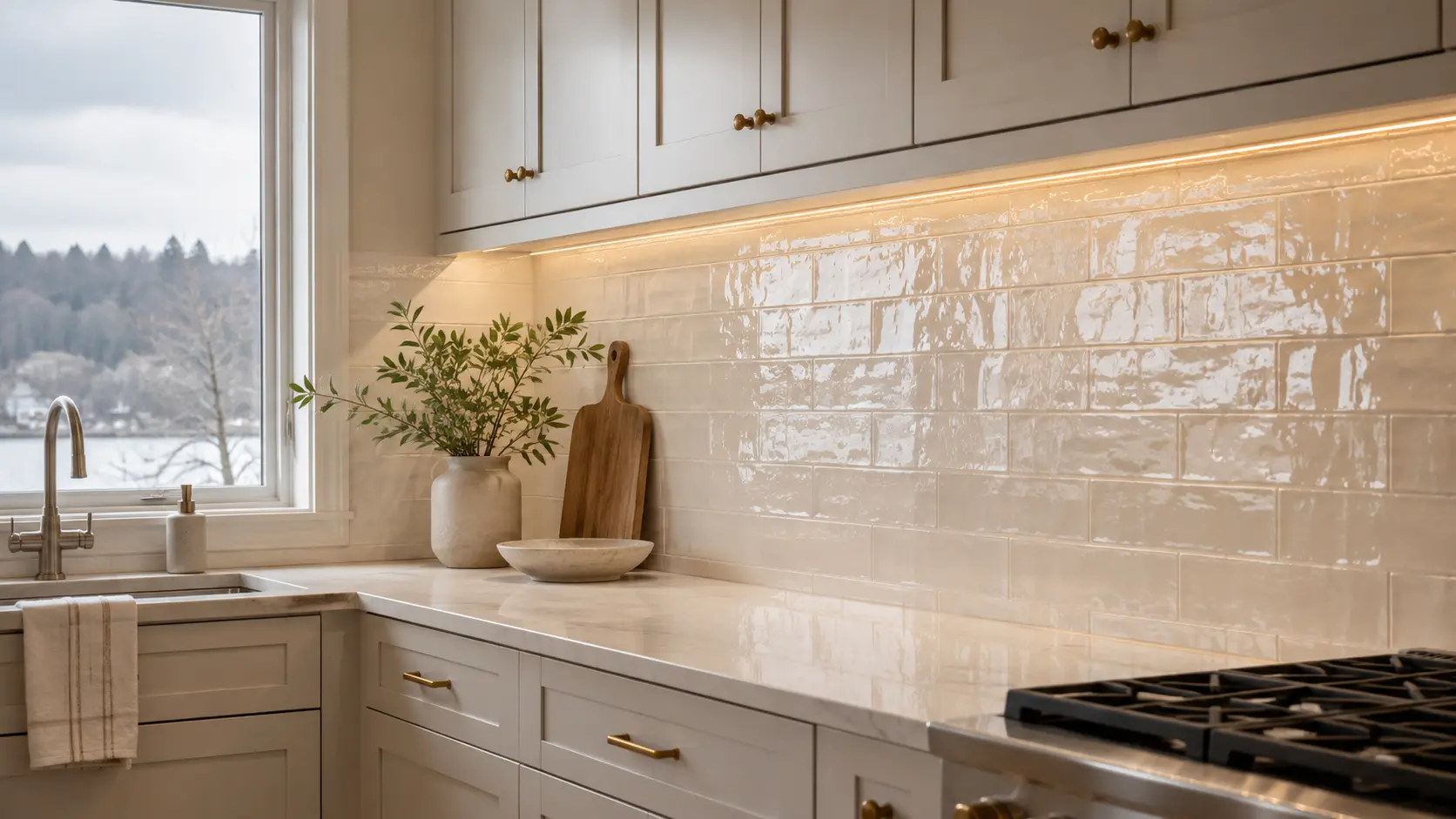
A backsplash is the cheapest way to change how a kitchen feels. It is a small surface, usually 30 to 40 square feet, sitting at eye level in the most-used room in the house. Swap it and the whole kitchen reads differently, without touching a cabinet or a countertop.
It is also one of the few kitchen projects that stays genuinely affordable. Most Kirkland homeowners spend somewhere around $700 to $1,200 installed on a standard run, and material choice, not square footage, drives almost all of the difference. Here are ten ideas that look considerably more expensive than they cost, with honest 2026 numbers for each.
Quick answerMost kitchen backsplashes cost $10 to $25 per square foot installed for ceramic or subway tile, $20 to $35 for glass, and $80 to $150 for a full quartz slab. A typical 30 to 40 square foot Kirkland backsplash runs about $700 to $1,200 installed. The most affordable upgrades are classic ceramic tile in a fresh layout, large-format porcelain, painted beadboard, and quartz remnant slab.
What a backsplash actually costs in 2026
Before the ideas, the numbers that let you judge them.
| Material | Installed cost per sq ft |
|---|---|
| Ceramic or classic subway tile | $10 to $25 |
| Large-format porcelain | $15 to $30 |
| Glass tile | $20 to $35 |
| Natural stone tile | $15 to $50 |
| Full quartz or stone slab | $80 to $150 |
| Peel-and-stick panels | Lowest, often under $10 |
Two line items people forget. Labor runs roughly $5 to $20 per square foot depending on the pattern, and removing an existing backsplash adds about $2 to $6 per square foot plus any drywall repair underneath. Intricate patterns and small mosaic tiles raise labor more than the tile itself raises material cost, which is worth knowing before you fall for a fishscale mosaic.
One piece of good news for Kirkland homeowners: a backsplash on its own is cosmetic finish work, so it does not require a permit as long as you are not moving electrical or plumbing. Our Kirkland permit guide covers where that line falls if your project grows.
10 affordable backsplash ideas
1. Classic white subway tile
The default for a reason. A 3 by 6 white ceramic subway tile is the lowest-cost path to a finished, timeless backsplash of any material on this list, and installers know it so well that labor stays cheap. In Kirkland's gray winters it does real work, bouncing what daylight you get back into the room.
Roughly $10 to $20 per square foot installed. Best for: resale-minded remodels and anyone who wants the kitchen to look current in fifteen years.
2. The same tile, a better layout
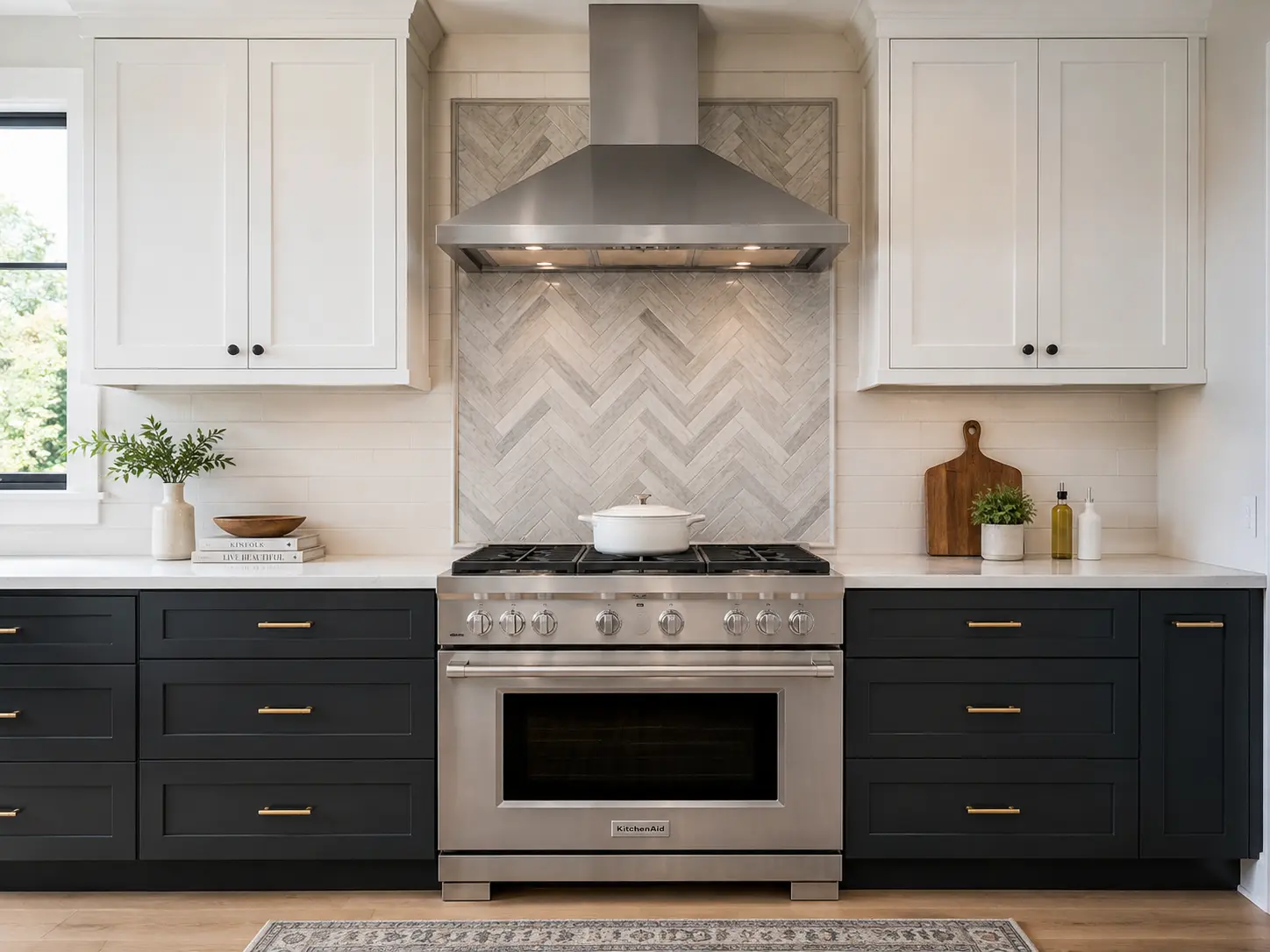
Here is the trick that costs almost nothing. Take that inexpensive subway tile and set it vertically stacked, in a herringbone, or in a chevron instead of the standard running bond. Same material price, completely different kitchen. Vertical stacking also draws the eye up, which helps in the 8 foot ceilings common in Kirkland's 1960s and 1970s Finn Hill and Kingsgate homes.
Adds a few dollars per square foot in labor for the extra cuts. Best for: getting a designed look on a plain-tile budget.
3. Large-format porcelain
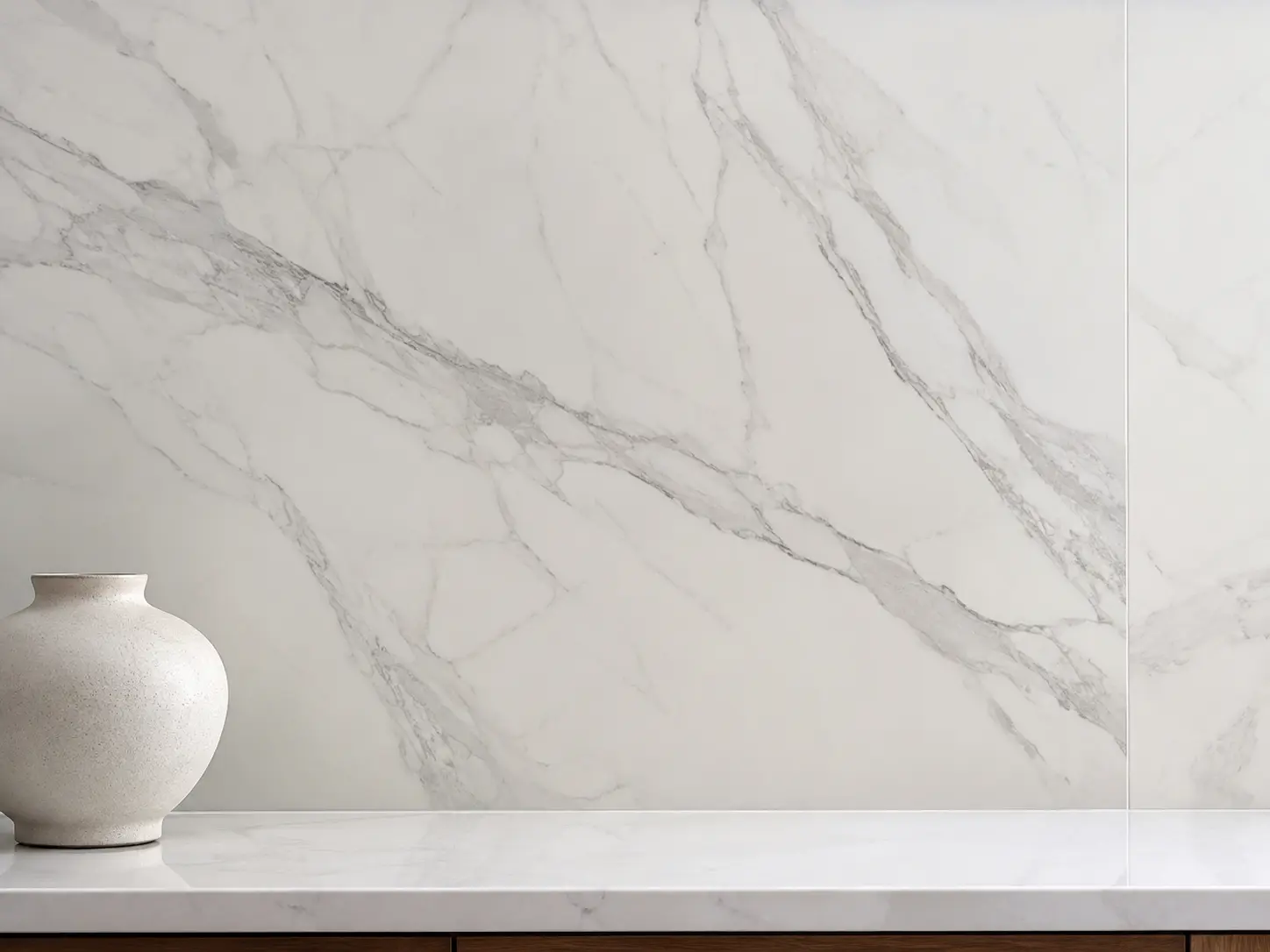
Fewer, bigger tiles mean fewer grout lines, which means a calmer wall and less to scrub. Large-format porcelain also mimics marble and concrete convincingly at a fraction of stone prices, and the reduced piece count can offset the higher material cost in labor.
Roughly $15 to $30 per square foot installed. Best for: modern kitchens and anyone who hates cleaning grout.
4. Handmade-look glazed ceramic
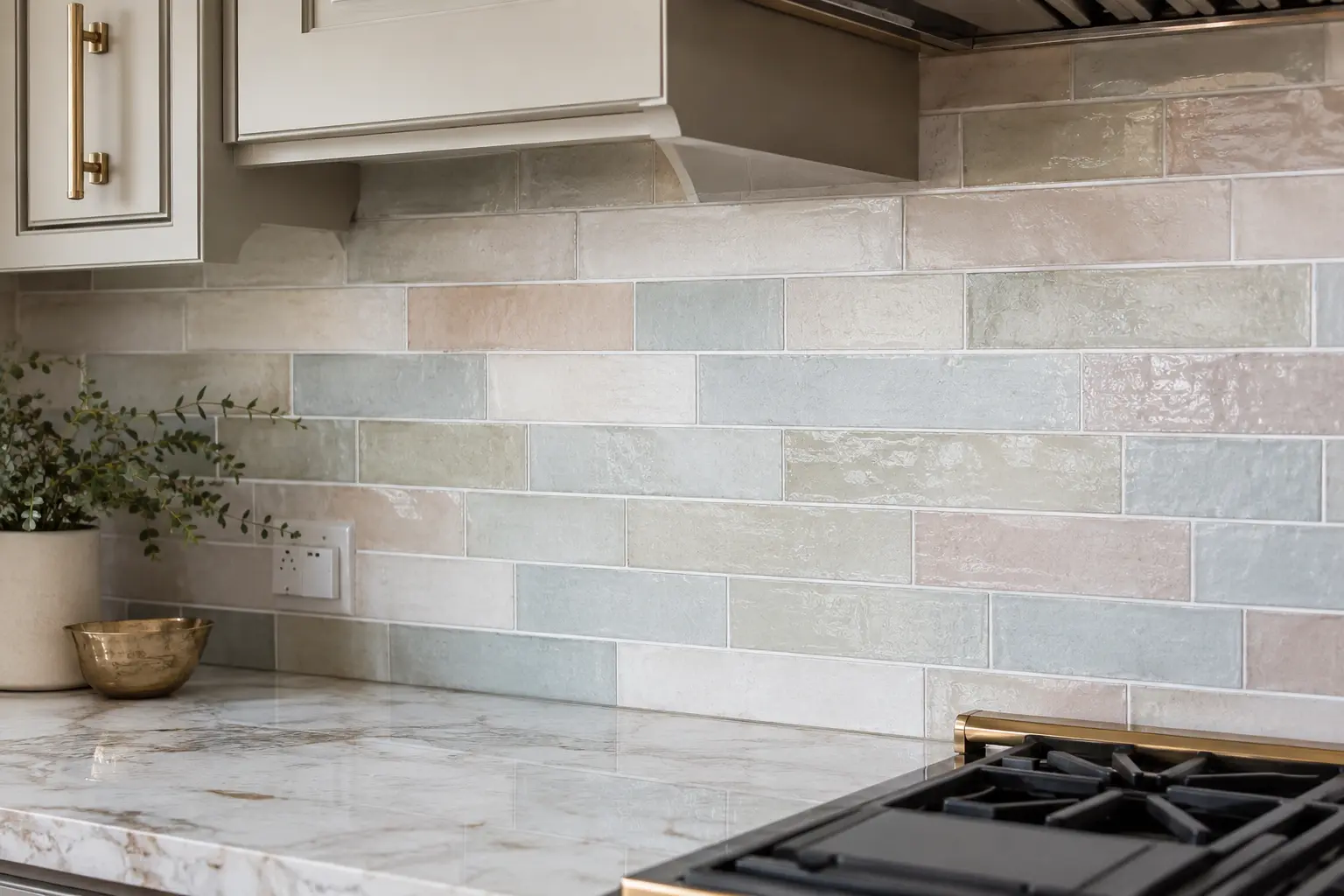
True zellige is expensive and slow to set. Machine-made ceramic that imitates its uneven glaze and variable edges gives you that handmade warmth and light-catching depth for a fraction of the price. The subtle irregularity reads as expensive because it looks like it was made by a person.
Roughly $12 to $25 per square foot installed. Best for: warm, characterful kitchens in older Kirkland homes.
5. Contrast grout on inexpensive tile
The cheapest design upgrade in this entire article. Take standard white tile and set it with a charcoal or warm gray grout instead of white. The grid becomes the pattern. It costs nothing extra in material and turns a builder-grade backsplash into a deliberate design choice.
No meaningful added cost. Best for: renters, flips, and anyone maximizing impact per dollar. One caution: darker grout hides stains but shows a sloppy install, so the tile setting has to be clean.
6. Painted beadboard or shiplap
Not everything has to be tile. A painted beadboard or shiplap panel behind the counter suits Kirkland's cottage-style and waterfront-adjacent homes, especially near Juanita and Market, and it installs in an afternoon. Use a durable enamel and seal the seams, and keep it away from directly behind a range where grease and heat are harshest.
Often under $10 per square foot. Best for: cottage and traditional kitchens on a tight budget.
7. A quartz remnant slab
A full slab backsplash usually costs $80 to $150 per square foot, which sounds out of reach. But a backsplash is small, and fabricators keep remnants from countertop jobs that are too small to sell as counters and priced accordingly. A remnant can put a seamless, groutless slab within reach, especially if you run it only behind the range as a feature.
Varies widely; remnants can cut slab pricing substantially. Best for: a high-end look on a limited area. Pair it with your countertop material for continuity; our countertop material guide covers the options.
8. The feature-zone approach
You do not have to do the whole wall. Run inexpensive tile across the general run, then spend on one small area, typically behind the range or the sink, with a pattern, a slab, or a decorative tile. Concentrating the budget where the eye lands gives you the impression of an expensive backsplash across the entire kitchen.
Reduces total cost while raising perceived value. Best for: stretching a fixed budget the smartest way.
9. Pressed tin or metal panels
Pressed tin panels bring texture and a bit of period character, and they suit the older housing stock around Rose Hill well. Stainless panels do the opposite job, reading as clean and professional behind a range, and they wipe down easily. Metal is also a genuinely practical choice directly behind a cooktop.
Roughly $20 to $30 per square foot for common metal panels. Best for: character kitchens and hardworking range walls.
10. Peel-and-stick, used honestly
Peel-and-stick has improved a lot, and it has a real place: rentals, a kitchen you plan to gut in a few years, or a low-risk way to test a color before committing. It is the cheapest option on this list and the fastest to install.
Often under $10 per square foot. Best for: temporary situations. Be realistic though. It does not hold up to heat and steam the way tile does, particularly behind a range, and it is not a resale asset. Treat it as a stopgap, not a remodel.
Choosing the right backsplash for a Kirkland kitchen
Three local considerations narrow the field fast.
Light. Kirkland winters are long and overcast, so a light, reflective backsplash pays off daily. Glossy ceramic, glass, and light-toned porcelain bounce daylight deeper into the room. If you want a dark backsplash, pair it with strong under-cabinet lighting or the wall will read as a void from November to March.
Moisture and heat. Everything here handles ordinary kitchen use, but directly behind a range, tile, stone, or metal outperform panels and peel-and-stick.
Housing era. Newer Totem Lake and Rose Hill builds carry contemporary large-format and slab looks naturally. The 1960s and 1970s homes in Finn Hill and Kingsgate often look best with something warmer, a handmade-look ceramic or a classic subway, that respects the age of the house.
Resale. If you are selling within a few years, stay broadly appealing. A neutral tile in a good layout appeals to everyone. A bold mosaic appeals to you.